Celebrity
Hugo Bachega is a BBC Middle East Correspondent reporting from Global Frontlines

Introduction
Few reporters in contemporary international journalism are as well-known and esteemed as Hugo Bachega. The BBC has named Bachega one of its top foreign correspondents in the world’s hot spots, known for his calm demeanor, political acumen, and balanced reporting. His reporting from Ukraine, Gaza, Lebanon, Iran, and Syria are always clear at times of global uncertainty.
Hugo Bachega is the BBC Middle East Correspondent, reporting from Beirut, Lebanon, some of the world’s most politically tense and risky stories. His reporting is characterised by his ability to be on the front line with the people, his ability to understand the culture and his human narrative, which makes him one of the most trusted journalists on international television today.
Here are some of the key facts about Hugo Bachega
You can see here some of the facts about Hugo Bachega.
| Category | Details |
|---|---|
| Hugo’s last name is Bachega.Hugo’s family name is Bachega. | |
| Profession | International Journalist, BBC Correspondent |
| Howard is at present the BBC’s Middle East Correspondent. | |
| Current Base | Beirut, Lebanon |
| Nationality | Brazilian |
| Nationality | Brazilian |
| Estimated Birth Year | 1983–1993 |
| Bachelor of Arts in Education (Media Studies) at the Pontifical Catholic University of São Paulo | |
| Early Career | Reuter’s Intern in São Paulo |
| Employer | British Broadcasting Corporation (BBC) |
| Position | Conflict Reporting/International Journalist |
| Specialties – Human rights, war reporting, migration, political journalism | |
| Awards | BBC Journalism Award, Association of International Broadcasting Award |
| Active on social media platforms: X/Twitter and Instagram.Active on social media platforms: X/Twitter and Instagram. | |
| Notable Documentary is a mini-series examining the situation of Hezbollah in trouble. | |
| Marital Status | Married (private family life) |
Background and childhood in Brazil

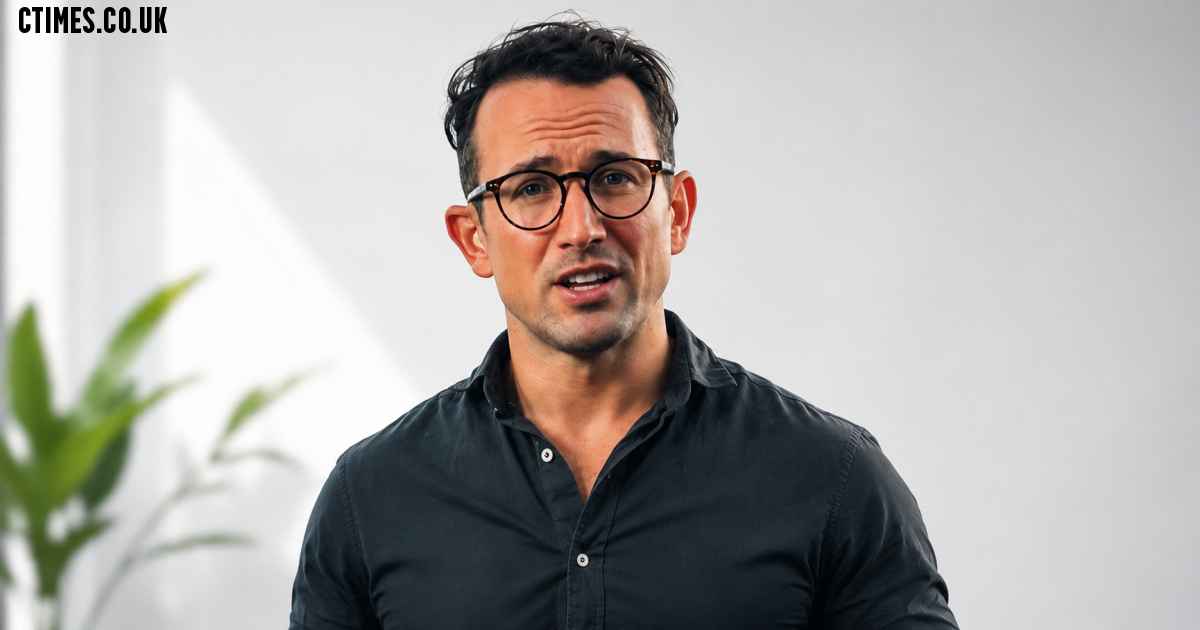
Hugo Bachega
Hugo Bachega was born in the biggest and most important city in South America, São Paulo. Born in Brazil, he was deeply immersed in social injustice, political discussion and cultural diversity early in life. That style of reporting, which is known to audiences today for its compassion and global awareness, was developed from these experiences.
He studied Media Studies at the prestigious Pontifical Catholic University of São Paulo in Brazil. Bachega is said to have been fascinated by international politics, stories and global affairs during his university days. Instead of just domestic news, he became more interested in how journalism could help to make international conflict and human suffering comprehensible to the world.
He then started his journalism career as an intern at Reuters in São Paulo after graduating. Reuters was a tough environment for training reporters to be fast, accurate and objective. His time at one of the world’s leading news agencies gave him the necessary skills to report well and the stamina to deal with the demands of international broadcast journalism.
His Brazilian background is still reflected in his reporting today. For Bachega, the experience of coming from the Global South means that he approaches the world differently than many Western correspondents. His journalism is known for its emphasis on:
- Human empathy
- Economic inequality
- Migration and displacement
- Power imbalances
- A voice for the common man.
This outlook has allowed him to truly relate to audiences globally.
Career Rise – Reuters to BBC International Reporting
Hugo Bachega made a big jump from Reuters to the BBC. He was primarily a breaking-news reporter at Reuters. At the BBC however, he branched out into long-form storytelling, live television coverage, politics and documentary journalism.
During these years, Bachega acquired a number of specialties:
- International conflicts
- Middle East politics
- Humanitarian crises
- International migration and refugee problems
- War-zone reporting
- Political instability
He was by the early 2020s a very public foreign correspondent for the BBC. He regularly published reports in:
- BBC World News
- BBC News Channel
- BBC Radio
- BBC News at Ten
- Digital BBC platforms
He took on his new role of BBC Middle East Correspondent officially in 2022 and was often on the move to the most volatile parts of the world. His office is in Beirut, where he covers war and politics in the following countries:
- Lebanon
- Israel
- Palestine
- Syria
- Iraq
- Iran
- Ukraine
Bachega has been known to report from hazardous locations, providing viewers with first-hand accounts of events in real time, rather than studio analysis as many TV reporters do.
Students will conduct major reporting projects on Ukraine, Gaza, Iran and Syria
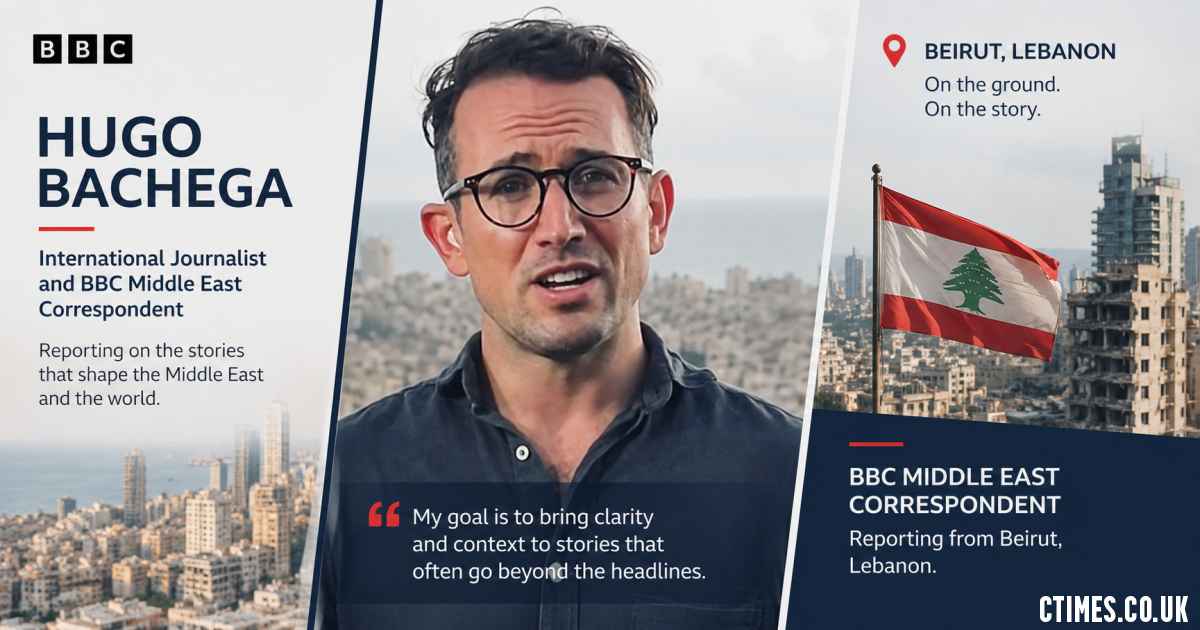
Hugo Bachega
Students will complete major reporting projects on Ukraine, Gaza, Iran and Syria.
Part of what has endeared Hugo Bachega to his audience is his willingness to enter any war zone he can. He is one of the BBC’s most recognisable international correspondents, having been on the front line in his journalism.
Russia-Ukraine War
As a part of the Russia-Ukraine war, Bachega provided live reports from the frontline areas in Ukraine, including Kyiv, immediately after Russia’s invasion in 2022. He reported on missile raids, civilian evacuations and the reactions of the western governments.
Perhaps one of his most memorable assignments was covering during times of extreme peril when Russian warplanes began to pound Ukrainian cities. The audience and media analysts were impressed with his demeanor in any crisis situation.
Gaza and Israel-Hamas Conflict
Bachega has also been a major contributor to BBC reporting of the Israel-Hamas war since the October 7 attacks. He analysed as he reported from Jerusalem and the surrounding area:
- Israeli military operations
- People in Gaza face a humanitarian crisis.There is a humanitarian crisis in Gaza.
- International political pressure
- US-Israel relations
- The suffering of civilians on both sides.
His stories frequently focussed on worsening humanitarian situations when winter set in and access to aid became more difficult.
Iran Protests
In Iran, Bachega has been reporting on:
- Government crackdowns
- Internet blackouts
- Public demonstrations
- Political tensions
- Human-rights concerns
His reporting enabled viewers in the world to appreciate the social and political situation within Iran in times of turmoil.
Syria and Iraq
Bachega has also covered at great length in Syria and Iraq, reporting on the plight of refugees, the devastation wrought by war and the attempts of families to rebuild their lives. He does not just report on military tactics or politics, but on people affected by violence and displacement who are ordinary people.
Hezbollah in Trouble” and Documentary Journalism
“Hezbollah in Trouble” is one of Hugo Bachega’s most well-known works, a BBC documentary. The documentary examined the political, economic and social challenges that Hezbollah and Lebanon face in this period of great turmoil.
The surprising thing about the documentary is that it’s balanced. Bachega did not just comment on politics but expressed the impact of Lebanon’s crises on the people. A style of journalism that combines political analysis with human stories is one of his hallmarks.
His documentary work is a part of the larger movement of modern journalism that demands:
- Give context in place of headlines.
- Human stories rather than statistics
- Instead of sensationalism, balanced analysis is provided.
Reporting Style – Calm, Human and Fact based
Audiences trust Hugo Bachega mostly because of his reporting style. In an age when the media can sometimes be too loud or too emotional, Bachega’s journalism is calculated and credible.
He has a reputation for reporting in a fashion that includes:
- Clear explanations
- Balanced political analysis
- Empathy for civilians
- Minimal sensationalism
- Understanding and composure in a professional setting.
There is also his unique Brazilian accent which has created his international identity. Bachega’s voice tells of the international character of contemporary journalism, not its obscurity.
He writes with emotional intelligence and is journalistic. This balance is particularly significant in cases of wars and humanitarian crises.
Awards, Recognition, and Current Role in 2026
Hugo Bachega’s journalism is well recognised in the media world. He has received the following awards:
- Academy Awards for an international journalist who has made a distinguished contribution to their profession.
- Association of International Broadcasting Award
He is famous for his accurate, courageous and compassionate reporting and these awards attest to that.
In 2026, Bachega is still the BBC Middle East Correspondent in Beirut. His role involves:
- Current reporting from war areas:
- Covering diplomatic developments
- Participating in political leaders’ interviews
- Investigating humanitarian crises
- Making a live television report
- Assisting in the production of documentaries and digital media journalism.
Operating in conflict areas is a very risky endeavor and demands a lot of safety training, cultural knowledge, and ethical sensitivity. Bachega has established himself as one of the BBC’s most reliable international reporters for his professionalism.
Who is Hugo Bachega?
Who’s Hugo Bachega?
Hugo Bachega is a modern breed of international media practitioners that have traditional journalism ethics and are also culturally aware of the world. His work is important because it adds humanity to something that may seem far removed or abstract.
In 2026 people believe him, he provides them with results:
- Reporting from the frontlines of hazardous areas.On the ground reporting in places of danger.
- Balanced and factual journalism
- Empathy for the civilian population who are suffering due to the war.
- Global South perspective
- The conduct of professionals in periods of crisis.
As misinformation quickly proliferates online, correspondents such as Bachega are becoming even more vital in informing the public about what is going on around the world in a reliable and informative manner.
Conclusion
Hugo Bachega is one of the most highly regarded international correspondents of his day. His work in Brazil, as a correspondent in São Paulo, and more recently as BBC Middle East Correspondent, is a testament to his commitment to honest, empathetic and brave journalism.
From Ukraine to Gaza, Iran, Syria and Lebanon, Bachega has always been able to cover global crises with calm and reliable reporting. His style, international approach and human storytelling have established him as a trusted voice for millions across the globe.
Hugo Bachega is still at the forefront of international journalism, covering news that illuminates, provokes and brings together worlds during the most crucial moments of our history in 2026.
FAQ
Who is Hugo Bachega?
Hugo Bachega is an international journalist and BBC Middle East Correspondent reporting from Beirut, Lebanon.
Where is Hugo Bachega from?
Hugo Bachega was born in São Paulo, Brazil.
What does Hugo Bachega report on?
He reports on war, politics, humanitarian crises, migration and international conflicts.
What countries has Hugo Bachega reported from?
He has reported from:
- Ukraine
- Gaza
- Lebanon
- Iran
- Syria
- Iraq
- Israel
- Palestine
What documentary is Hugo Bachega known for?
“Hezbollah in Trouble” is one of his best-known BBC documentaries.
What is Hugo Bachega known for in journalism?
He is known for calm reporting, balanced journalism, frontline coverage and human-centered storytelling.