Celebrity
James Roney: The UCSB Scientist Decoding Hormones, Mating, and Human Behavior

Introduction
By 2026, James Roney’s prominence in the field of evolutionary psychology and human behavioral endocrinology reaches new heights. As a professor at the University of California, Santa Barbara, Roney focuses on one of science’s most intriguing pursuits: the role of hormones in human cognition and behavior—something he has now explored for over twenty years.
His research on attraction and testosterone, among many other topics, has changed how medical science as a whole, including psychology and relational science, views human physiology. His work remains front and center in the new science of psychology and endocrinology.
Who Is James Roney?

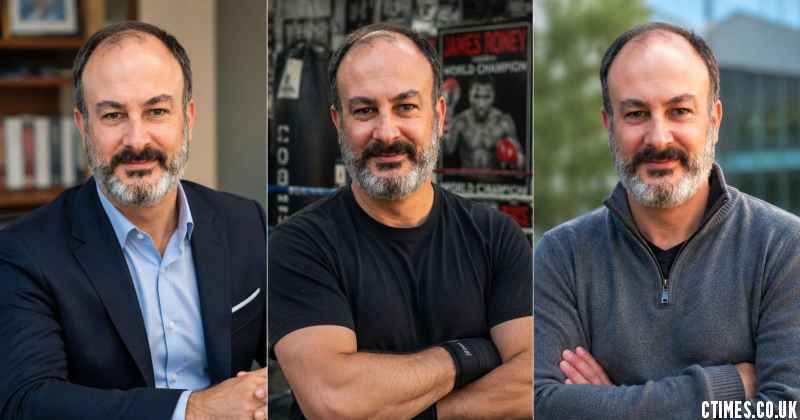
Who Is James Roney?
James R. Roney is a researcher and professor in the United States best known for studying the role of hormones in human behavior. His research explores the evolved role of hormones and their influence on mating, relationships, and even social and motivational behavior.
Roney challenges the traditional thinking of many psychologists who, when studying human behavior, emphasize the role of the environment and situational context. Instead, Roney focuses on the role of biology and evolved endocrinology. He promotes the adaptive nature of hormones.
Roney remains an important member of the Center for Evolutionary Psychology at the University of California, Santa Barbara and collaborates with some of the most esteemed scholars in Psychology, including Leda Cosmides and John Tooby. His work has made the University of California, Santa Barbara one of the preeminent centers for the study of evolutionary psychology and behavioral science.
Academic Background: Russian Studies to Psychology
One of the intriguing things about James Roney’s biography is his unusual education.
Roney obtained his Bachelor of Arts in Russian Studies from the University of Michigan. This shows that he had a passion for culture and languages and had the ability to scrutinize human beings. Although this field back then was concentrated on the humanities, he later shifted to the field of psychology and science.
After that, he finished his doctoral studies in Psychology and Human Development at the University of Chicago, a prestigious university in the United States. Roney, who graduated in 2002, was a postdoctoral researcher at the University of Chicago’s Institute for Mind and Biology.
In 2004, he became a UCSB faculty member and kept on developing a globally notable record of research. With his training background in the humanities and the sciences, he is in a unique position to dissect difficult psychological problems.
Research at UCSB: Hormones and Human Behavior
With James Roney’s research, he suggests a simple yet powerful concept. He proposes to think of hormones as adaptive biological signals that define the ways and situations when they signal the need to synchronize certain behaviors.
Compared to other researchers who think of hormonal changes as random and fluctuations, Roney takes the stand that such changes more often serve an important purpose from the perspective of evolution.
His lab focuses on the effects of hormones on:
- Attraction and mate choice
- Sexual motivation
- Courtship behavior
- Stress
- Relationships
- Reproductive choices
- Social competition
This kind of perspective has considerably impacted the modern science of behavioral endocrinology.
His work integrates detailed biological assessment with principles of evolution, and provides a novel perspective on the development of hormonal systems and their influence on contemporary behavior.
Mating Encounter Response: Testosterone, Attraction, and Courtship
A well-known example from Roney’s work is in the area of the mating encounter response.
This work shows that, in a manner similar to non-human species during a courtship, men’s levels of testosterone and cortisol can change rapidly, even within a few minutes, following their encounter with an attractive woman.
Roney suggests that the biological system may be highly evolved and can act, at any time, to prepare men for possible mating encounters.
His work proposes that the increase in testosterone may lead to greater courtship motivation and confidence, while an increase in cortisol may result in greater alertness and focused attention.
He has shown that hormonal changes can facilitate the complex social and reproductive behaviors of human beings.
While not common, Roney’s work has been cited in other disciplines, especially in psychology, neuroscience, and medicine.
Ovarian Hormones and Female Sexual Motivation
Roney has also done extensive work on the area of female sexual motivation and the role that ovarian hormones may play.
Here are the key findings from his research:
He mapped the effects of various hormones:
- Estradiol tends to increase sexual motivation and attraction
- Progesterone tends to decrease sexual desire and interest in reproduction
- Stress hormones tend to decrease reproductive hormones
Roney discovered that the increase of estradiol often precedes increase in sexual interest by about two days.
Roney also discovered that progesterone acts as a biological ‘stop signal’ that decreases sexual desire in the course of certain phases in the menstrual cycle.
- This is relevant to:
- Women’s health and fertility
- Hormone replacement therapy (HRT)
- n Sexual Medicine and Clinical Endocrinology
Roney’s work has brought the behavior of female sexual psychology one step closer to the scientific understanding of dynamic reproductive behavior.
Collaborations, Awards, and Recognition
Roney has a great influence because of his collaborations with many top scientifically active researchers.
Roney has collaborated with Dan Conroy-Beam who is also an evolutionary psychologist at UCSB, and Roney and Conroy-Beam developed highly regarded, award winning research on assortative mating.
Their research has determined that there is a mating preference and evolutionary paired mate selection mechanism that describes the degree of personality, attractiveness, and educational similarities that couples usually exhibit.
Their research has contributed to and been recognized by the 2020 Margo Wilson Award, which is one of the top honors within this discipline.
Roney currently receives the following recognition:
- 2020 Margo Wilson Award.
- HBES Fellow Status (2025) from the Human Behavior and Evolution Society.
- He is often invited to major psychology and medical conferences.
- His influence in clinical endocrinology research is expanding.
By 2026, Roney’s work is widely cited in psychological and medical research.
Why is Roney significant in 2026?
Roney continues to be more significant in research that integrates fields often studied in isolation.
He incorporates evolutionary thinking into contemporary biological research. He not only elucidates the science of hormones, but also the evolutionary reasoning.
He counters the crude simplifications and misconceptions of human behavior. His research brings clarity to complex issues such as attraction, sexual desire, and mate choice.
His research also fills an important medical void. His research is increasingly cited by medical practitioners to explain:
- Libido and hormones.
- Sexual dysfunction and the stress-fertility relationship.
He also describes the psychology of relationships.
Roney’s work also addresses the gaps in psychology and gender textbooks and is formative to improving the quality of education and the practice of psychology.
While the discourse of biology, gender, and behavior continues to evolve, Roney’s research is foundational.
His research is likely to continue to exert significant influence for many years. Roney’s academic legacy is already established and will be further improved by his prolific publication in areas of psychology, endocrinology, neuroscience, and evolution. His influence will continue to grow.
Some of Roney’s Most Important Publications
Some of Roney’s most important publications include the following:
In 2019, Roney published the first paper of its kind to report the effects of human sex hormones on human mating behavior.
Roney (2019) published a paper on sex hormones and human mating behavior that is still required reading for courses that teach behavior and hormonal endocrinology.
As of 2026, Roney is still producing work that is changing the way we think about the intersections of human behavior and hormonal systems. His research is still revealing the systems evolution has designed to work in tandem and to influence human behavior.
Conclusion
Due to his focus on the mating behavior of human beings, Roney is a leading voice in sex research from an evolutionary perspective, and from a behavioral endocrinology perspective. Roney’s career took him from the University of Michigan to the University of Chicago, and now to the University of California, Santa Barbara (UCSB). Roney is the author of research that is so influential and so important to the fundamental understanding of human beings.
Roney’s research on an array of sex hormones has changed the fields of psychology and medicine, and his research is even impacting relationship science. Roney’s acknowledgment for his work is evidenced by his appointment as a Fellow of the HBES in 2025 and for the continual citation of his work. Roney is the author that aspiring researchers in behavioral endocrinology and evolutionary behavior should follow to maintain the most current understanding of the research.
Roney is currently the leading researcher that should be followed to maintain up to date on the understanding of human attraction, evolutionary behavior, and human reproductive psychology.
Frequently Asked Questions
1. Who is James Roney?
James Roney is a Professor of Psychological & Brain Sciences at UCSB who specializes in evolutionary psychology and human behavioral endocrinology.
2. What is Roney most famous for?
Roney is most famously known for his studies on hormones and their roles in attraction, desire, and social behavior.
3. Where did he study?
Roney did his undergraduate studies at the University of Michigan, where he got a B.A. in Russian studies. His Ph. D. in Psychology and Human Development was obtained at the University of Chicago.
4. What important research findings did Roney have?
His research findings explain what happens to testosterone during courtship, the role of estrogen during female sexual motivation, and the role of progesterone in decreasing sexual desires.
5. Is he still doing research in 2026?
Yes, in 2026 he will still be an active professor at UCSB, a researcher, an author, and a speaker at conferences. His research and work will be important for the fields of psychology and medical sciences all over the world.